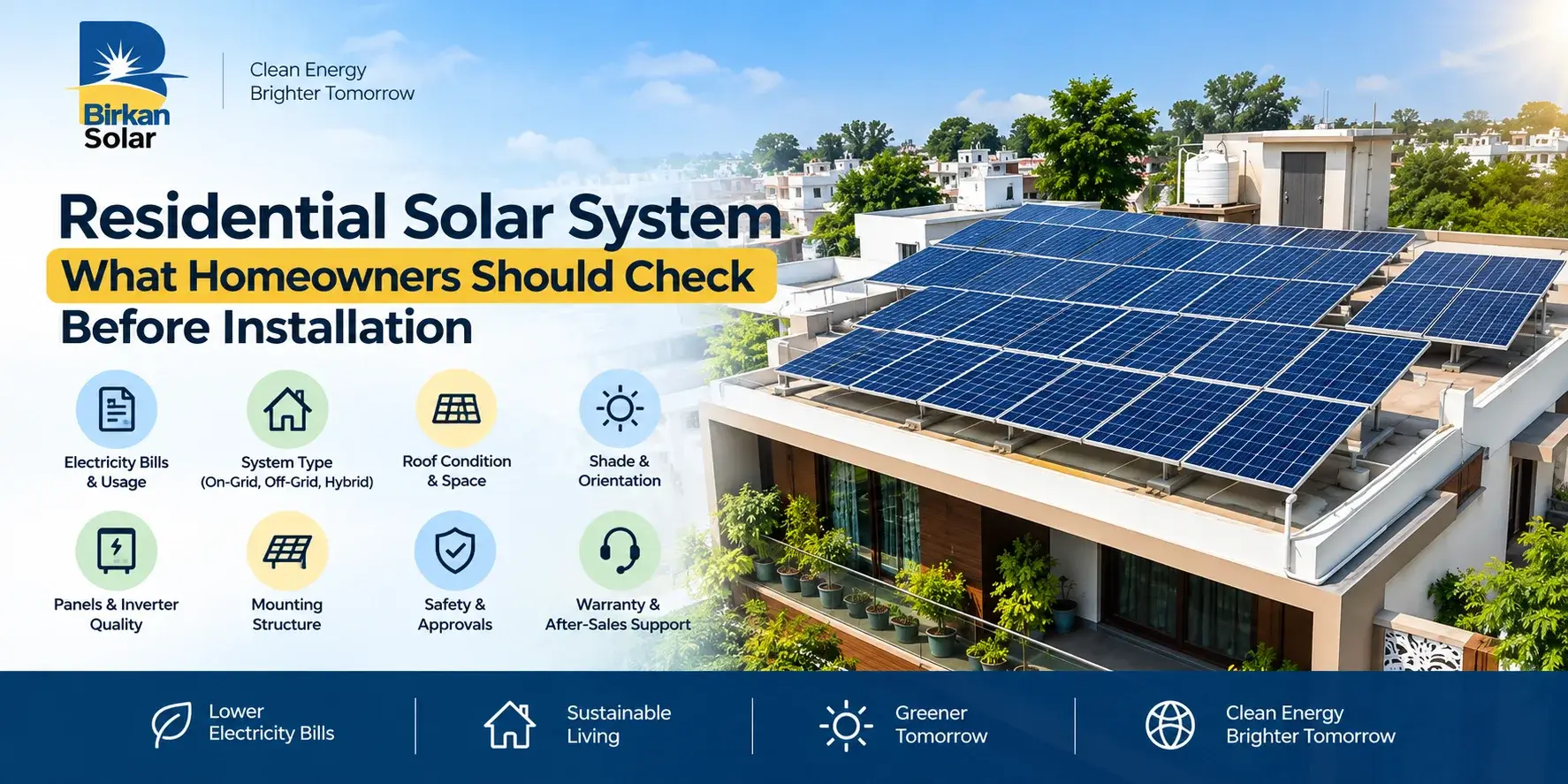
Installing a residential solar system is a long-term decision. The panels may be the most visible part of the project, but the final result depends on much more: accurate system sizing, roof condition, shade analysis, inverter selection, mounting quality, electrical protection, approvals and after-sales support. A system can look impressive on the day of installation and still underperform if these details were not checked properly.
Homeowners are often presented with a quick price and a panel count before anyone has studied their electricity bills or inspected the roof. That approach makes comparison difficult and can create problems later. A better approach is to treat solar as a complete home energy project. First understand how the house uses electricity, then check whether the roof can support the design, and finally compare suppliers on technical scope, safety and service rather than price alone.
This guide explains what to check before approving a home solar installation. It is written for homeowners who are comparing proposals and want a residential solar system that is safe, practical and suitable for long-term use.
What Should Homeowners Check Before Solar Installation?
Before installing a residential solar system, check your electricity consumption, roof strength, available shadow-free area, system type, panel and inverter specifications, mounting structure, cable and protection design, approval requirements, warranty terms, installation scope and after-sales support. A reliable quotation should show how the recommended capacity was calculated and what is included in the final price.
1. Review Your Electricity Bills and Usage Pattern
Start with at least twelve months of electricity bills. Note monthly units, seasonal peaks, sanctioned load and the appliances that consume the most power. Air conditioners, water heaters, pumps, refrigerators and home-office equipment can change the sizing decision considerably.
Monthly consumption is only part of the picture. Also identify when electricity is used. Solar panels generate during daylight, so daytime consumption has a direct relationship with self-consumption. If a home uses most of its electricity after sunset, the homeowner may need to consider battery storage, applicable grid-settlement arrangements or a system designed around essential daytime loads.
Do not estimate the system only by counting rooms or appliances. Two similar houses can have different energy profiles because of family size, appliance efficiency, usage hours and climate. Ask the installer to use actual bills and explain the assumptions behind the recommendation. If a supplier recommends a capacity without requesting bills, treat that as a reason to seek more detail.
2. Decide What You Want the Solar System to Do
A solar purchase can have several objectives: reduce monthly bills, provide backup during outages, increase energy independence, support a new home or prepare for future loads such as an electric vehicle. These objectives lead to different system designs.
An on-grid system is usually focused on generating power for the home and interacting with the utility grid. It may be appropriate when the grid is reasonably reliable and bill reduction is the main goal. A hybrid system adds batteries and can support selected loads during outages. An off-grid system is designed for locations that cannot depend on the grid and requires much more careful battery and load planning.
Ask a basic but important question: what will still work when the grid goes down? A standard on-grid inverter normally shuts down during an outage for safety. A hybrid system may back up only a designated circuit rather than the whole house. The quotation should state exactly which lights, fans, sockets, refrigerator, pump or other appliances are connected to backup power.
3. Inspect the Roof Before Approving the Design
The roof should be inspected before equipment is finalised. Check its age, structural condition, waterproofing, parapet walls, drainage, access route and any planned renovation. If the roof needs major repair soon, complete that work before installing panels or include it in the project plan.
The usable roof area is not the same as the total roof area. Space may be needed around water tanks, lift rooms, vents, skylights and service pathways. Panels should be accessible for inspection without creating unnecessary safety risks. The layout should also avoid blocking drainage or making future roof maintenance difficult.
Ask for a roof layout with panel positions, walkway space and equipment locations. The drawing should show how the structure will be fixed or placed, where cables will run and how water leakage will be avoided. A site visit is more valuable than a generic online calculation because roof conditions vary from house to house.
4. Check Shade, Direction and Panel Orientation
Shade from trees, neighbouring buildings, parapets, tanks and rooftop rooms can reduce solar generation. It is important to check shade at different times of day and during different seasons. Even when only part of a panel or string is shaded, the electrical effect can be larger than a homeowner expects.
South-facing roofs often provide favourable exposure in India, but an east- or west-facing roof can also support a useful system. The correct choice depends on the roof angle, local conditions, household demand and available area. When a roof has different orientations, the installer may need separate MPPT inputs or a design that keeps differently oriented panel groups electrically separated.
Do not accept a promised generation figure without understanding how it was calculated. Ask whether the estimate includes shading, temperature, dust, inverter losses, cable losses, seasonal variation and panel degradation. A realistic estimate is more useful than an optimistic number that looks attractive in a quotation.
5. Compare the Panel Specifications, Not Just the Wattage
Solar panels should be compared using their complete specifications. Review rated power, efficiency, temperature coefficient, product warranty, performance warranty, degradation terms, certification, manufacturer support and the exact model proposed.
Higher-efficiency residential solar panels can be useful when roof space is limited. If the roof is large, another panel with a lower price may still be practical, provided its quality and support are acceptable. The decision should consider the total installed cost and expected energy output, not only the wattage printed on the module.
Ask the supplier to identify the number of panels, model number, technology, total DC capacity and expected annual generation. Words such as premium, advanced or high quality are not specifications by themselves. The equipment list should be precise enough for you to compare two quotations without guessing.
6. Evaluate the Inverter and Its Service Support
The inverter converts the DC electricity produced by the panels into AC electricity used by household appliances. It also manages important functions such as monitoring, protection and grid interaction. For many homes, the inverter is one of the most important service-related components in the system.
Compare inverter efficiency, warranty, MPPT range, monitoring features, protection functions, operating temperature range and compatibility with batteries if future expansion is possible. A string inverter may work well on a simple, mostly unshaded roof. Microinverters or optimisers may be considered where shade, multiple orientations or module-level monitoring is important. The right choice depends on the actual roof rather than a universal preference.
Ask who will handle a warranty claim, where service is available and how quickly a failed inverter can be inspected or replaced. A system that cannot be serviced efficiently may remain offline even when the panels themselves are functioning.
7. Check the Mounting Structure and Roof Protection
The mounting structure holds the panels in place for years and transfers wind and other loads to the roof. It should be selected for the roof type, panel dimensions, local wind conditions, corrosion exposure and maintenance requirements.
Ask what material and finish will be used, how fasteners will be protected, how the structure will be anchored and how roof waterproofing will be preserved. A structure should not obstruct drainage or create avoidable leakage points. For some roofs, a ballasted solution may be considered; for others, a properly engineered anchored structure may be more suitable. The installer should explain the choice.
Cable management is equally important. Cables should be routed away from sharp edges, standing water, excessive heat and areas where they can be damaged during roof work. The finished installation should be neat, accessible and documented.
8. Verify Electrical Safety and Protection Devices
A residential solar system is an electrical installation, not just a set of panels. The design should address DC and AC isolation, earthing, surge protection, overcurrent protection, cable sizing, polarity, equipment clearances and safe shutdown procedures.
Ask for a clear explanation of the protection devices included in the proposal. Confirm that earthing and testing are part of the installation scope, not optional items added later. The inverter and distribution equipment should be installed in a location with suitable ventilation and protection from water, heat and unauthorised access.
The homeowner should receive basic documentation after commissioning: equipment list, single-line diagram or wiring summary, protection details, warranty documents, monitoring access and emergency contact information. These records make future troubleshooting safer and easier.
9. Understand the Approval, Metering and Documentation Process
Grid-connected projects may require approval, inspection, metering or documentation from the local distribution company and other relevant authorities. Requirements can vary by state, utility, system size and current programme rules.
Before signing, ask which activities the installer will manage. The scope may include application support, documentation, inspection coordination, net-meter assistance, commissioning reports and subsidy-related paperwork where applicable. It should also state what the homeowner must provide, such as electricity bills, identity documents, ownership proof or sanctioned-load information.
Government incentives and approval rules can change. Do not build the financial plan around an old subsidy chart or a verbal promise. Confirm current eligibility and documentation requirements through the relevant official channel before treating any incentive as guaranteed.
10. Compare Complete Quotations on a Like-for-Like Basis
Two solar quotations can have very different scopes even when both show the same system capacity. Compare the exact panel and inverter models, mounting structure, cables, protection devices, earthing, installation labour, transport, taxes, approvals, monitoring, testing and handover documents.
Ask whether the price includes structural work, roof repair, long cable runs, elevated structures, additional distribution boards or backup circuits. These items can materially change the final cost. Also check whether battery capacity is stated in usable kilowatt-hours or only in nominal terms, because the two figures are not identical.
The best quotation is not automatically the cheapest. It is the one that makes the technical scope, assumptions, exclusions and service responsibilities clear. If a supplier cannot explain an important line item, request clarification in writing before comparing the total.
11. Review Warranty and After-Sales Responsibilities
Solar equipment has different warranties. Panels, inverters, batteries, structures and workmanship may each have separate terms. Read what is covered, what is excluded, how claims are raised, who pays transport and labour, and how long a response is expected to take.
Ask whether system monitoring is included after installation and how performance issues will be diagnosed. Remote alerts can identify inverter faults or communication problems, but physical inspection may still be needed for soiling, cable damage, loose components or roof-related issues.
Choose a provider that gives written documents and remains available after commissioning. Birkan Solar describes its service around consultation, site assessment, residential solar solutions, installation support and monitoring. The project-specific proposal should still define the exact responsibilities, response terms and equipment brands for your home.
13. Use a Homeowner Installation Checklist
Before approving a home solar installation, ask the supplier to provide the following in writing:
- Recommended capacity based on electricity bills and site conditions.
- Roof layout showing panel placement, access and shade considerations.
- Exact panel, inverter, battery and protection-device models.
- Expected generation with the main assumptions stated.
- Mounting structure material, fixing method and waterproofing approach.
- Electrical protection, earthing and commissioning scope.
- Approval, metering and documentation responsibilities.
- Full price breakup with inclusions, exclusions and taxes.
- Product, workmanship and service warranty terms.
- Handover documents, monitoring access and support contact.
This checklist makes it easier to compare proposals and helps prevent important details from being lost in a verbal discussion.
Conclusion: Check the System Before You Check the Price
The right residential solar system is not defined by panel count alone. It is the result of matching energy use, roof conditions, system type, component quality, safety, approvals and after-sales support. A careful pre-installation review reduces the chance of poor generation, roof damage, unclear warranty responsibility or unexpected project costs.
Homeowners should ask for a bill-based design, a proper roof inspection, a shade-aware generation estimate, exact equipment details and a complete installation scope. They should also understand what happens during a power cut, how the system will be maintained and who will provide support after commissioning.
If you are comparing solar options for your home, contact Birkan Solar for a consultation and site assessment. A project-specific evaluation can help you choose a solar system for home use that is practical, safe and aligned with your long-term electricity needs.
Frequently Asked Questions
1. What should I check first before installing a residential solar system?
Start with your electricity bills and roof condition. The installer should understand your annual consumption, daytime usage, available shadow-free area, roof strength and backup expectations before recommending system capacity.
2. How do I know what size solar system my home needs?
The system size should be based on electricity consumption, daytime load, roof area, shade, local sunlight and the intended bill-reduction or backup target. Use actual bills rather than choosing a capacity only from the number of rooms.
3. Should I choose an on-grid or hybrid residential solar system?
Choose on-grid when bill reduction is the main goal and the grid is reasonably reliable. Consider hybrid when backup power or storing daytime solar for later use is important. The final choice depends on budget, load priorities and outage frequency.
4. Will solar panels work during a power cut?
A standard on-grid system usually shuts down during a grid outage for safety. A hybrid system with a suitable inverter and battery can power selected backup loads, but it may not operate the entire house.
5. How much roof space is required for residential solar panels?
The area depends on system capacity, panel efficiency, layout, access paths and roof obstructions. A professional roof plan should show the actual panel arrangement instead of using only a broad area estimate.
6. Why is a roof inspection important before home solar installation?
A roof inspection checks structural condition, waterproofing, drainage, access, shade and mounting feasibility. It can also identify repairs that should be completed before panels are installed.
7. What panel specifications should homeowners compare?
Compare the exact model, rated power, efficiency, temperature coefficient, product warranty, performance warranty, degradation terms, certification and manufacturer support. Panel wattage alone is not enough for a useful comparison.
8. Which inverter is best for a solar system for home use?
The right inverter depends on roof layout, shading, system capacity, monitoring needs and whether batteries may be added. Compare efficiency, MPPT range, warranty, service availability and compatibility with the proposed panel array.
9. What should be included in a home solar installation quotation?
The quotation should identify panels, inverter, structure, cables, protection devices, earthing, installation, testing, approvals, monitoring, taxes, transport, warranty and any backup or battery scope. It should also list exclusions.
10. How can I compare two residential solar quotations?
Compare them on a like-for-like basis using exact equipment models, total DC and AC capacity, expected generation, structure, protection, installation scope, warranties, approvals, service terms and final price. Do not compare only the headline amount.
11. Are batteries required in a residential solar system?
Batteries are not normally required for a basic on-grid system. They are useful for backup, evening use or off-grid operation, but they increase upfront cost and require storage-capacity and replacement planning.
12. What safety features should a home solar system have?
The design should address DC and AC isolation, earthing, surge protection where required, suitable cable sizing, overcurrent protection, safe equipment placement and a clear shutdown procedure. These items should be part of the written scope.
13. How often do residential solar panels need maintenance?
Maintenance depends on dust, pollution, birds, rainfall and the local environment. Panels may need periodic cleaning, while cables, structure, inverter, earthing and protection devices should be inspected as recommended by the installer.
14. Are government subsidies available for home solar installation?
Support may be available under current central or state programmes, but eligibility, approved equipment, application steps and amounts can change. Confirm current rules through the relevant official portal and electricity distribution company.
15. Why should I hire a professional solar installer?
A professional installer can size the system, inspect the roof, design safe electrical protection, coordinate approvals, install the structure correctly and provide warranty support. This reduces the risk of poor performance and difficult service claims.
Ready to Plan Your Residential Solar System?
The best installation decisions are made before the first panel reaches the roof. Contact Birkan Solar for a consultation and site assessment to discuss your electricity use, roof conditions, system type and home solar installation requirements.