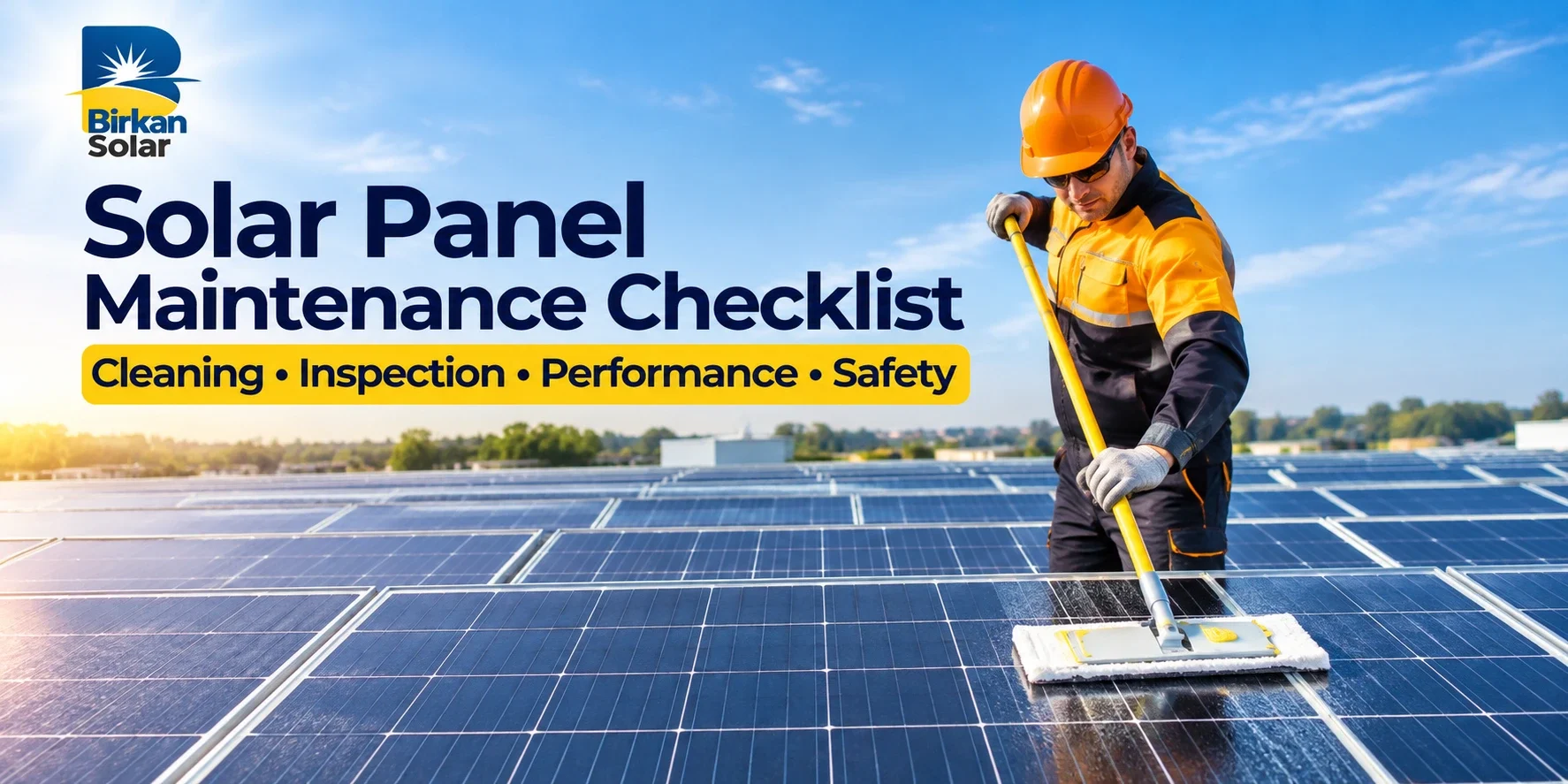
Solar panel maintenance should combine safe visual inspection, performance monitoring, cleaning when soiling justifies it, inverter and protection checks, roof and drainage review, vegetation or shade control, documentation and qualified electrical testing. The frequency should reflect the site, rainfall, dust, birds, nearby industry, roof access, equipment instructions, warranty terms and observed energy trends—not a universal monthly rule.
Owners can review dashboards and inspect from a safe accessible position, but rooftop access, live electrical work, connector handling, torque checks and fault diagnosis belong to trained and authorized personnel. Before any task, follow the site safety plan, equipment manuals and approved isolation procedure. Maintenance should preserve evidence and warranty conditions rather than creating damage through aggressive cleaning or unapproved modifications.
| Maintenance stream | Owner-level check | Qualified-service task |
|---|---|---|
| Performance | Review generation and alerts | Diagnose strings, inverter and electrical causes |
| Modules | Observe dirt, shade or damage safely | Close inspection and approved cleaning |
| Electrical | Note alarms, smells or visible damage | Isolation, testing, torque and repair |
| Roof and structure | Look for leaks, debris or movement | Access, fastener, corrosion and waterproofing review |
| Records | Keep bills, reports and event log | Issue test results and corrective-action report |
Build a Maintenance Plan from the System Documents
Collect the approved layout, single-line diagram, module and inverter manuals, commissioning tests, warranties, structural details, monitoring credentials and installer contacts. Record serial numbers and locations of isolators, distribution boards, surge protection and meters. Without this baseline, later technicians may not know the intended string arrangement, settings or safe isolation sequence.
Birkan Solar presents a rooftop solar panel solution and a dedicated rooftop solar system range. Use the exact supplied equipment documents for maintenance decisions because product families differ. Store electronic and site copies, control revisions and add every approved modification. If documents are incomplete, commission a competent survey before intrusive work.
Set Frequency by Risk and Evidence
A clean low-dust roof with reliable monitoring may need a different schedule from a bakery, cement area, highway edge, bird roost or coastal industrial site. Rainfall pattern, tilt, access, pollution, pollen, leaves and construction work affect soiling and inspection needs. Equipment makers may specify intervals or conditions. Insurers, owners or local procedures can add requirements.
Create routine dashboard review, safe visual inspection, professional preventive service and event-driven checks. Trigger extra review after severe storms, nearby construction, roof work, repeated inverter trips, unusual energy decline, water leakage, fire or electrical events. Start with a conservative plan, then adjust using records. Do not stretch safety-critical inspections merely because output appears normal; some loose, corroded or damaged components do not immediately produce a visible generation loss.
Monitor Energy Before Reaching for Cleaning Tools
Compare generation with expected seasonal behaviour, irradiance or a suitable normalized benchmark rather than yesterday alone. Note weather, grid outages, curtailment, shading and load changes. A gradual decline can indicate soiling, vegetation, sensor drift or equipment ageing; a sudden step may indicate a tripped breaker, failed string, communication loss or inverter issue. Monitoring data narrows the inspection and reduces guesswork.
Keep daily or monthly summaries and an event log. Check that portal time, system capacity and site name are correct. Separate zero generation from missing communications. If the platform reports string or MPPT values, compare similar channels under similar conditions, but do not open equipment to investigate unless authorized. Escalate recurring alarms with screenshots, timestamps and weather context so service personnel can reproduce the issue efficiently.
Perform Visual Checks from a Safe Position
Look for obvious cracked glass, discoloration, severe dirt, bird nests, leaves, new shade, loose visible cables, sagging conduits, displaced guards, damaged enclosures, corrosion, water paths and unauthorized roof work. Binoculars, fixed cameras or drone services may reduce exposure where permitted. Never lean over edges, step between unsupported roof sheets or walk on modules.
Use a checklist tied to module rows and equipment IDs. Photograph conditions consistently and mark uncertain items for professional review. Stop and isolate the area through the approved process if there is smoke, burning smell, arcing sound, exposed conductor, broken live equipment, fire damage or flooding. Do not touch a damaged array; solar modules can produce DC voltage whenever illuminated, even when the building supply is switched off.
Clean Modules Only When Needed and Approved
Cleaning frequency should follow observed soiling, rainfall and output impact. Use the module manufacturer’s instructions for water quality, temperature, tools and detergents. Soft non-abrasive equipment and controlled water are commonly required, but the exact method belongs to the product documentation. Avoid pressure that can damage seals, abrasive pads, harsh chemicals and scraping hardened deposits with metal tools.
Plan cleaning during suitable conditions to reduce thermal shock and glare. Protect workers from falls and electricity, prevent water entering connectors or equipment and control runoff. Do not stand on panels. If water is hard, residue can replace one form of soiling with another. Record date, method, area, condition before and after, water source and any defects. Compare normalized output where possible before assuming cleaning created a financial benefit.
| Condition | Preferred response | Avoid |
|---|---|---|
| Loose dust | Approved soft method or suitable water process | Dry abrasive scrubbing |
| Bird droppings or sticky deposits | Soften and use manufacturer-approved cleaning | Metal scraping or harsh solvents |
| Hard-water site | Use specified low-mineral water or approved method | Allowing visible mineral residue |
| Hot modules | Follow safe temperature and timing guidance | Sudden cold-water thermal shock |
| Damaged glass or cable | Restrict access and call qualified service | Cleaning or touching the damaged area |
Inspect Mounting Structure and Fasteners
Qualified personnel should check rails, clamps, bolts, braces, roof attachments, corrosion, deformation and signs of movement. Review only specified fasteners and torque requirements; unnecessary retightening can damage threads, clamps or module frames. Confirm modules remain within approved clamping zones and that no roof contractor has removed or altered supports.
Birkan Solar describes rooftop solar structure installation as part of its offering. For maintenance, use the project structural drawings and mount manufacturer instructions. Look for loose ballast, displaced wind deflectors, cracked grout, sealant failure or corrosion at dissimilar-metal interfaces. After major storms, arrange a targeted structural and roof review before returning the array to routine operation if damage is suspected.
Protect the Roof Drainage and Waterproofing
Solar equipment should not prevent water flow or hide roof defects. Clear leaves and debris from drains using the roof owner’s safe procedure. Check for ponding, damaged membranes, cracked tiles, deteriorated flashing, loose cable supports and penetrations that show leakage. Trace indoor stains promptly; water can travel before appearing and the visible leak may not be directly below its source.
Coordinate solar and roofing contractors so responsibility is clear. A roofer should not disconnect electrical equipment without authorization, and a solar technician should not apply unapproved waterproofing. Preserve roof warranty terms and document any penetration repair. Maintain walkways and setbacks required for access. When reroofing is planned, budget for safe module removal, storage, inspection, reinstallation and recommissioning rather than working around an energized array.
Check Cables Connectors and Enclosures Professionally
Qualified inspection should look for unsupported cables, UV damage, abrasion, sharp bends, animal damage, water entry, connector mismatch, loose glands, corrosion and signs of heating. Cables should not rest on the roof or hang under modules where wind can move them. Connector caps and seals must remain suited to the equipment; taped or improvised joints are not a durable repair.
Do not unplug DC connectors under load or mix connector brands or types without explicit approval. Any insulation, continuity or thermal inspection must follow safe procedures and equipment limits. Correct the cause, not only the symptom: a hot connector may reflect poor assembly, contamination, incompatibility or mechanical strain. Record the circuit, component, finding, test evidence, repair and post-repair verification in the maintenance report.
Review Inverters Alarms and Ventilation
Keep inverter air paths and required clearances free of storage, dust accumulation and vegetation. Observe indicators, fan noise, unusual heat, error codes and communication status. Check the equipment manual before cleaning filters or vents. Do not open covers that expose hazardous voltages. Make sure labels and local isolators remain legible and accessible.
A qualified service visit should review event history, firmware policy, settings, connections, cooling and manufacturer-prescribed tests. Settings should not be changed merely to suppress alarms. Grid events, insulation faults, overtemperature and communication problems require different responses. Back up approved settings and monitoring access before authorized updates. If the inverter has repeatedly tripped, provide timestamps, operating conditions and recent work history to support diagnosis.
Inspect Protection Earthing and Isolation
The maintenance scope should include accessible AC and DC isolators, overcurrent devices, surge protective devices, earthing and bonding, labels and distribution boards. Visual indicator windows can help, but competent testing may be required. A device that has operated or reached end of life must be replaced with a correctly specified component after the reason for operation is understood.
Isolation procedures must recognize that PV conductors can remain energized in daylight and that multiple sources may exist. Verify warning signs, circuit schedules and emergency information. Do not use the array structure as an assumed earth path without design evidence. After lightning, major faults, flooding or fire, arrange an event-specific inspection and testing plan rather than simply resetting breakers and watching whether production returns.
Manage Shade Vegetation Birds and Pests
Trim vegetation through a safe property-management plan that protects cables and modules. Track new construction, antennas, tanks or trees that create shade. Partial shade can reduce production and may create uneven operating conditions; do not remove a tree or alter a neighbouring property without permission. Compare current photographs with the commissioning layout to identify changes.
Bird guards or mesh should be designed for the array, fire access, ventilation and roof drainage and should not damage wiring or module frames. Avoid makeshift sharp devices or blocking gaps required by the mounting design. Remove nests only under applicable wildlife and safety procedures. Investigate repeated animal damage and seal building entry routes where appropriate. Record the control method so future cleaners do not remove it unintentionally.
Use Thermal Imaging and Electrical Tests Correctly
Thermal imaging can help identify abnormal heating, but results depend on irradiance, wind, viewing angle, load and camera settings. It should be performed and interpreted by competent personnel under useful conditions, then confirmed through inspection or electrical evidence. One warm area does not automatically identify a failed module, and a poor-quality scan can miss defects.
Electrical tests may include string current or voltage comparison, insulation checks, continuity, polarity and other manufacturer or project-specific procedures. Apply the correct isolation and reconnection sequence and preserve connector integrity. Compare readings with commissioning baselines and similar strings under the same conditions. Do not perform invasive tests simply because they are available; each test should answer a defined diagnostic or preventive question.
Maintain Batteries and Backup Equipment Separately
If the rooftop system includes batteries, backup supply or hybrid operation, follow the specific battery and inverter maintenance plan. Review state of health, temperature, alarms, ventilation, enclosure, protection and emergency procedures. Battery hazards and service methods vary by chemistry and system design; generic solar panel cleaning guidance is not sufficient.
Keep battery firmware, settings and service records coordinated with the inverter. Test backup circuits and controlled transitions as defined by the project. Prevent untrained occupants from resetting battery faults or opening cabinets. When capacity appears lower, distinguish a load change, temperature effect, control setting, communication problem and actual degradation before replacing modules. Maintain safe end-of-life handling and approved disposal arrangements.
Create a Clear Service Report and Corrective-Action Log
Every visit should record date, weather, personnel, safety controls, equipment IDs, observations, photographs, measurements, alarms, cleaning work, defects and recommendations. Classify actions by urgency and name the responsible party. A report that says only “system serviced” provides little protection for the owner, technician or warranty claim.
Close corrective actions with evidence and update as-built records when components or routes change. Trend recurring issues to identify root causes such as roof traffic, pests, drainage or unstable grid conditions. Birkan’s About Us page provides company context; the maintenance order should still specify exact tests, exclusions, spare parts, response time and acceptance. Retain reports for performance, insurance and warranty discussions.
Use a Seasonal and Event-Based Checklist
Before dusty or dry periods, confirm cleaning triggers, monitoring and water arrangements. Before heavy rain, review drains, roof seals and cable support from safe access. Before storm seasons, inspect structure and loose objects. After each demanding season, compare normalized performance and maintenance cost with the plan. Seasonal preparation prevents routine work from arriving only after energy loss or leakage becomes obvious.
Event-based checks should follow severe wind, hail, lightning, flooding, fire, nearby crane or construction activity and any roof repair. Restrict access and obtain professional assessment when damage is suspected. Birkan publishes additional rooftop solar guidance for homeowners owners should still use the installed system manuals and site-specific safety plan for maintenance decisions.
Train Site Users to Protect the Solar Asset
People who never service the PV system can still prevent damage. Train security, facility, housekeeping and roofing teams not to place objects on modules, tie cables to solar wiring, block inverter ventilation, operate unknown isolators or authorize roof work without coordination. Provide one emergency contact and simple instructions for alarms, smoke, water entry and storm damage. Keep access routes and fire-service information visible.
Use permit-to-work controls for any rooftop activity near the array. Contractors should receive the layout, energized-area warning, exclusion zones and escalation process before starting. After unrelated roof, telecom or HVAC work, inspect the affected area and compare photographs. Many maintenance failures begin with unrecorded third-party changes rather than equipment ageing, so awareness and change control are practical parts of protecting generation.
Frequently Asked Questions
1. How often do rooftop solar panels need maintenance?
Frequency depends on site conditions, equipment instructions, safety requirements and performance trends. Combine routine monitoring with planned professional and event-driven checks.
2. How often should solar panels be cleaned?
Clean when observed soiling and performance evidence justify it, using the module manufacturer’s approved method. There is no universal monthly interval.
3. Can owners clean panels themselves?
Only if access and the task are demonstrably safe and permitted. Roof work and electrical proximity often require trained professionals and fall protection.
4. Can tap water be used for cleaning?
Follow the module maker’s water-quality guidance. Hard water can leave mineral residue, and unsuitable water or chemicals can damage surfaces.
5. Should panels be cleaned while hot?
Avoid methods that create thermal shock. Follow product instructions and plan work during safe, suitable conditions.
6. Does rain clean solar panels completely?
Rain can remove some loose dust but may not clear sticky deposits, bird droppings, sheltered edges or mineral residue.
7. What causes a sudden drop in solar generation?
Possible causes include grid outage, inverter trip, failed string, shading, communication loss, protection operation or damage. Use alarms and qualified diagnosis.
8. Do solar panels require annual electrical testing?
Use the project, manufacturer and risk-based maintenance plan. Qualified testing may be scheduled or triggered by faults, events and performance changes.
9. Can people walk on solar panels?
No. Walking can damage glass, cells, frames or seals and creates serious fall and electrical risks.
10. What should be checked after a storm?
From a safe position look for damage, movement, debris, water, alarms and output changes, then arrange professional structural and electrical inspection if indicated.
11. How are rooftop solar warranties protected during maintenance?
Follow manufacturer instructions, use compatible parts and authorized procedures, retain reports and avoid unapproved cleaning, opening or modifications.
12. What should a maintenance contract include?
Define frequency, safety controls, cleaning method, inspections, electrical tests, reports, spares, exclusions, response time and corrective-action pricing.
Protect Rooftop Solar Output with Evidence-Led Maintenance
A useful maintenance plan turns observations and performance data into timely action without exposing owners to roof or electrical hazards. Share the system size, module and inverter details, roof type, commissioning records, monitoring access, site photographs, soiling conditions and service history with Birkan Solar through the rooftop solar service contact page. Request a site-specific inspection and maintenance scope with safety controls, tests, exclusions and reportable acceptance criteria.