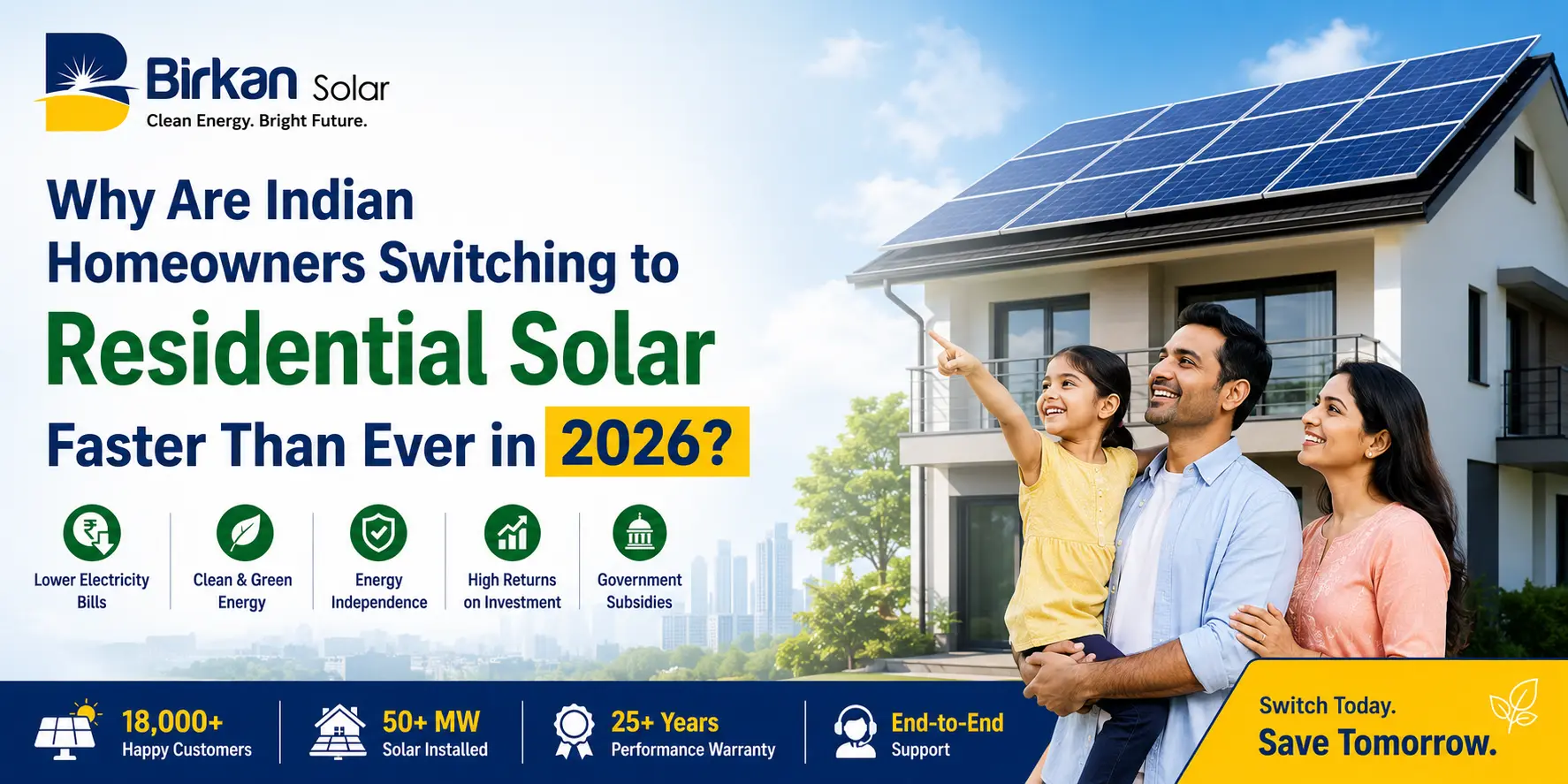
Across Indian cities, a quiet shift has been unfolding on rooftops. What was once considered a long-term sustainability upgrade is now increasingly viewed as a practical household infrastructure decision. Rising electricity demand, unpredictable tariff revisions, improving panel efficiency, and wider awareness of lifecycle economics have all accelerated interest in Residential Solar Systems.
What is particularly interesting in 2026 is not simply the increase in installations. It is the change in buyer behavior.
Homeowners are no longer asking only about “how much electricity a solar system can generate.” They are evaluating module quality, inverter compatibility, degradation rates, structural loading, thermal efficiency, and long-term maintenance implications. The conversation has become more technical — and more informed.
That evolution is reshaping how manufacturers, suppliers, and engineering teams approach residential solar deployment across India.
Industry Context & Market Positioning
India’s residential solar market has matured considerably over the past few years. Earlier adoption cycles were heavily subsidy-driven, but today many homeowners are making decisions based on operational economics and energy resilience rather than incentives alone.
Urban residential demand is especially strong in:
- Tier-1 metropolitan regions
- Rapidly expanding Tier-2 cities
- Independent housing clusters
- Gated communities
- Semi-urban residential developments
The underlying reasons are practical.
Air-conditioning loads have increased. Household appliance density has grown. Remote work has altered daytime power consumption patterns. At the same time, grid dependence remains a concern in several regions where voltage fluctuations and outages still affect appliance longevity.
A modern residential solar installation is therefore increasingly viewed as a distributed energy asset rather than an optional environmental upgrade.
Manufacturers such as Birkan Solar, operating from manufacturing hubs like Ghaziabad and supplying across India, are also contributing to this transition by improving system availability, module consistency, and installation support networks.
For homeowners exploring region-wise service accessibility, the company’s presence network across India also reflects how residential solar distribution has expanded beyond major metros.
What Are Residential Solar Systems?
A Residential Solar System is a rooftop-based energy generation setup designed to convert sunlight into usable electricity for homes. It typically includes solar panels, inverters, mounting structures, protection devices, and optional battery storage systems that help reduce dependence on grid electricity.
Another Quick Definition
Residential solar systems are integrated photovoltaic installations engineered for household electricity consumption. These systems are designed to support lighting, appliances, cooling equipment, and backup requirements while improving long-term energy efficiency and reducing conventional power usage.
Technical Specifications & Key Features
Not all residential solar systems are engineered the same way. Performance differences often emerge from component compatibility rather than panel wattage alone.
Key technical parameters usually evaluated include:
| Parameter |
Typical Residential Range |
|
System Capacity |
1 kW – 15 kW |
|
Module Efficiency |
19% – 23% |
|
Inverter Type |
String / Hybrid / Microinverter |
|
Mounting Structure |
GI / Aluminium |
|
Operating Voltage |
System dependent |
|
Design Life |
20–25 years |
|
Temperature Coefficient |
Lower is preferable |
|
Protection Systems |
SPD, MCB, Earthing |
One common misunderstanding among first-time buyers is assuming higher wattage automatically guarantees better performance.
In practice, rooftop orientation, shading conditions, inverter efficiency, ambient temperature, cable losses, and structural design often influence real-world output more significantly than headline panel ratings.
This is where engineering evaluation becomes important.
A properly configured 5 kW system operating under optimized conditions may outperform a poorly designed 6 kW installation over its lifecycle.
Materials & Production Methodology
The manufacturing side of residential solar systems rarely receives enough attention during buyer evaluation.
Yet long-term reliability often begins at the production stage.
Solar Module Construction
Most residential systems today use monocrystalline photovoltaic modules because of their:
- Higher conversion efficiency
- Better low-light response
- Reduced space requirement
- Improved temperature performance
Core material layers typically include:
- Tempered solar glass
- EVA encapsulation sheets
- Silicon photovoltaic cells
- Backsheet protection layers
- Aluminium framing
- Junction box assemblies
Manufacturing consistency matters significantly here.
Even minor cell microcracks, lamination inconsistencies, or improper sealing can gradually affect output performance over time — particularly in Indian climatic conditions where systems face high heat loads, dust accumulation, monsoon exposure, and thermal cycling.
Structural Components
Mounting structures also deserve closer scrutiny than they usually receive.
Poor-quality support structures may introduce:
- Corrosion risks
- Wind-load instability
- Roof penetration leakage
- Alignment deviations
In coastal and high-humidity regions especially, galvanization quality and fastening integrity become important durability indicators.
Manufacturing-focused companies generally pay closer attention to structural tolerances because field failures often originate from mechanical weaknesses rather than photovoltaic cells themselves.
Performance & Durability Insights
Residential solar systems in India operate under demanding environmental conditions.
Heat, airborne particulate matter, seasonal humidity variation, and irregular maintenance practices can all affect long-term system behavior.
Factors That Influence Performance
1. Temperature Management
Solar panels do not necessarily perform better under extreme heat.
Higher module temperatures may reduce conversion efficiency. Proper airflow beneath rooftop panels therefore plays an important role in thermal dissipation.
2. Dust Accumulation
In many Indian cities, dust deposition significantly impacts energy yield.
Even moderate surface contamination can reduce light absorption efficiency. This is especially relevant near highways, construction zones, or industrial corridors.
3. Inverter Quality
Inverters often determine system intelligence and operational stability.
Voltage handling capability, MPPT optimization, and protection logic all affect real-world output consistency.
4. Cable & Connector Integrity
Energy losses frequently occur through poor electrical integration rather than panel inefficiency.
UV-resistant cabling, proper connector crimping, and weather-protected junction management contribute to system longevity.
Over time, experienced buyers increasingly recognize that durability is an ecosystem characteristic — not a single-component feature.
Applications & Use Environments
Residential solar systems are now being integrated across a wide range of housing environments:
- Independent houses
- Villas
- Farmhouses
- Builder floors
- Housing societies
- Duplex residences
- Semi-rural residential properties
Usage patterns also differ considerably.
Some homeowners prioritize daytime energy offset. Others focus on backup integration through hybrid systems. In high-tariff urban locations, consumption optimization becomes the dominant objective.
There is also growing adoption among newly constructed residential developments where architects now allocate rooftop planning for solar integration during the design phase itself.
This reflects a broader industry shift: solar readiness is gradually becoming part of residential infrastructure planning rather than an afterthought retrofit.
Residential Solar System Types: A Neutral Comparison
System Type |
Suitable For |
Key Consideration |
|
On-Grid Solar System |
Urban homes with reliable grid access |
No battery backup during outages |
|
Off-Grid Solar System |
Remote or unstable power regions |
Higher battery dependency |
|
Hybrid Solar System |
Homes needing both savings and backup |
Higher initial investment |
|
Microinverter-Based System |
Complex rooftops with shading |
More component-level optimization |
There is no universally “best” residential solar system type.
System selection should depend on:
- Roof geometry
- Load profile
- Local grid reliability
- Future expansion plans
- Maintenance accessibility
- Budget expectations
That distinction matters because oversizing or mismatching system architecture can increase procurement costs without proportional operational benefit.
Buyer Evaluation Checklist
Before finalizing a residential solar system, homeowners often benefit from reviewing the following points carefully:
Technical Evaluation
- Module efficiency ratings
- Temperature coefficient values
- Inverter compatibility
- Structural material quality
- Cable specifications
- Earthing protection
Installation Assessment
- Roof load-bearing capability
- Shading analysis
- Water drainage considerations
- Wind exposure conditions
- Future maintenance accessibility
Supplier Evaluation
- Manufacturing transparency
- Product traceability
- Pan-India service capability
- Technical documentation availability
- Warranty clarity
A thoughtful procurement process generally reduces long-term operational uncertainty more effectively than simply pursuing the lowest upfront price.
Frequently Asked Questions
1. How long do residential solar systems typically last?
Most residential solar systems are designed for operational lifespans of 20–25 years, although actual durability depends on module quality, inverter maintenance, environmental conditions, and installation practices.
2. Are residential solar systems effective during monsoon seasons?
Yes. Solar systems continue generating electricity during cloudy or rainy conditions, although output levels may temporarily reduce due to lower solar irradiance.
3. What is the ideal rooftop condition for solar installation?
Roofs with minimal shading, strong structural integrity, adequate drainage, and south-facing exposure generally provide better solar performance conditions in India.
4. Do residential solar systems require frequent maintenance?
Maintenance requirements are relatively moderate. Periodic cleaning, inverter inspection, cable checks, and monitoring of energy generation trends are usually sufficient for most systems.
5. Can homeowners expand their solar system later?
Many systems allow future expansion if inverter sizing, structural planning, and electrical compatibility are considered during initial installation design.
Supply & Distribution Capability
One of the less discussed aspects of residential solar deployment is logistics coordination.
Solar systems involve multiple interconnected components — modules, inverters, structures, protection equipment, and installation accessories. Delays or inconsistencies in any single element can affect commissioning timelines.
Manufacturers with organized production and distribution capabilities are often better positioned to maintain consistency across geographically diverse installations.
Birkan Solar’s residential solar solutions reflect this broader market transition toward structured Pan-India supply capability supported by manufacturing operations based in Ghaziabad.
As residential demand expands across both urban and semi-urban regions, coordinated supply networks are becoming increasingly important for installation continuity and after-sales technical support.
Conclusion
The rapid rise of residential solar adoption in India during 2026 is not simply a trend driven by electricity pricing or environmental awareness.
It reflects a deeper shift in how homeowners think about energy reliability, infrastructure resilience, and long-term operational efficiency.
What is changing most noticeably is the sophistication of evaluation itself.
Buyers are asking better questions. They are comparing system architecture rather than only wattage. They are examining production quality, installation methodology, and lifecycle performance more carefully than before.
That evolution is likely to shape the next phase of India’s residential solar market.
If you are evaluating a residential solar system for an upcoming project, reviewing technical specifications, environmental conditions, and long-term operational expectations carefully can help reduce procurement risks. For further technical guidance or product-related information, you can connect with the team at Birkan Solar.